Photo Credit: Jeremiah Seo

Hi! I'm Boris.

Welcome to my website! I am a sixth-year graduate student working in the Hatlab, a quantum information laboratory. I'm enrolled at the University of Pittsburgh, although my group has recently moved to Yale University, where I am spending some time as a Visiting Assistant in Research.

It's been a wild ride! For me, quantum computers are fascinating for two reasons. First, they would allow us to probe interesting physics questions, such as, "How does a complex molecule really behave?" and, "What is the fundamental nature of information?" Second, quantum computers don't yet exist, and building one is a huge engineering puzzle that is fun to think about!

When I'm not in the lab, I like to play soccer, play guitar, and explore the parks of New Haven.


Education

University of Pittsburgh

August 2020 - Present

Physics PhD


University of North Carolina, Chapel Hill

August 2016 - May 2020

B.S. Physics and Mathematics

Research Positions

Yale University

October 2024 - Present

Visiting Assistant in Research
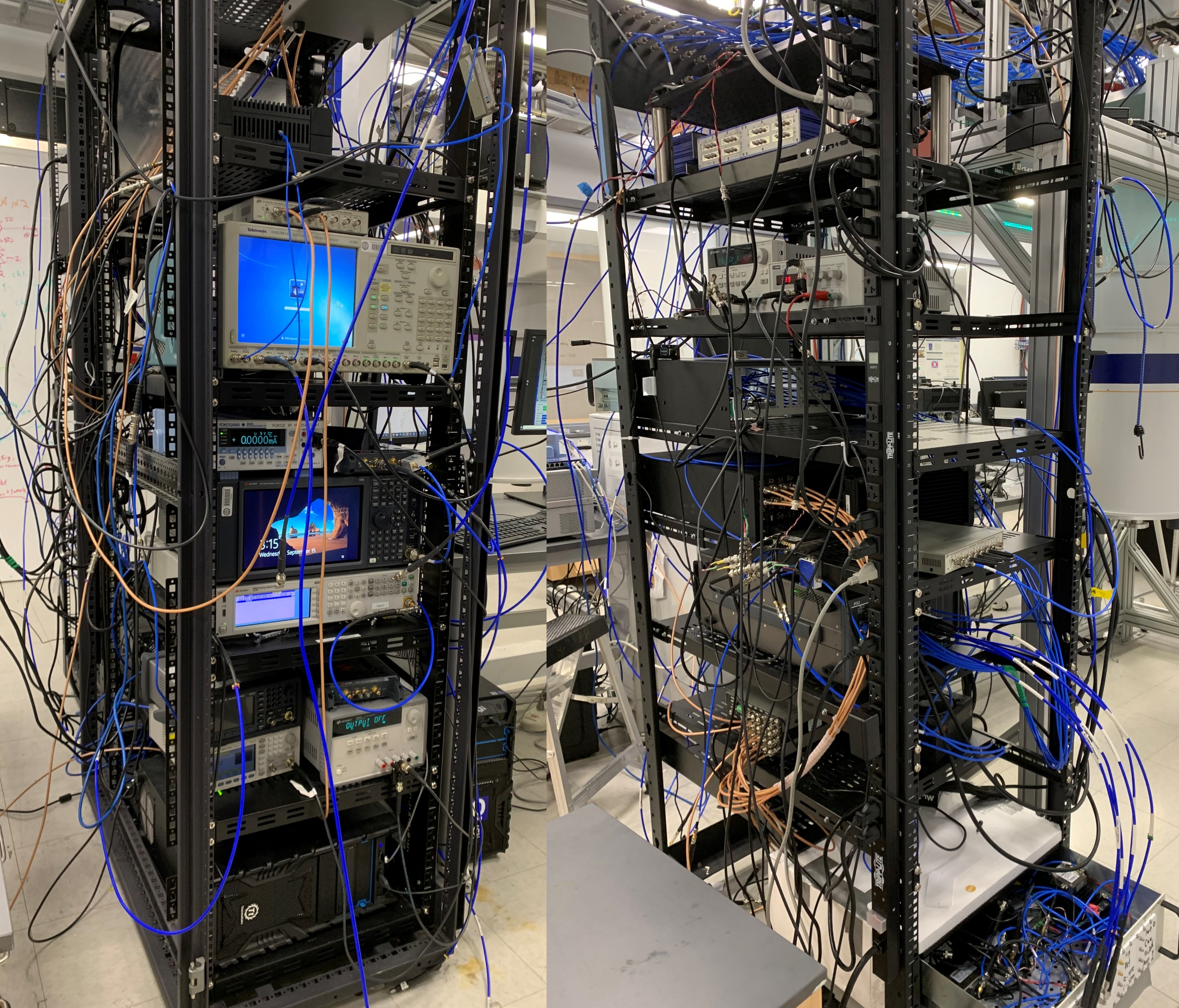

Directional Quantum-limited Parametric Amplifiers

Summer 2021 - Present

I currently work in the Hatlab, a superconducting quantum information group led by Dr. Michael Hatridge. My research activities currently focus on:

  • Building a new way to measure qubits and amplify the readout signal using pulsed parametric conversion
  • Trying new configurations of existing parametric amplifiers to exceed the standard quantum limit of measurement
  • Stabilizing the temperature of microwave electronics for qubit control and readout
  • Investigating new approaches for magnetometry using superconducting circuits

  • Earth's Field NMR

    Fall 2018 - Spring 2020

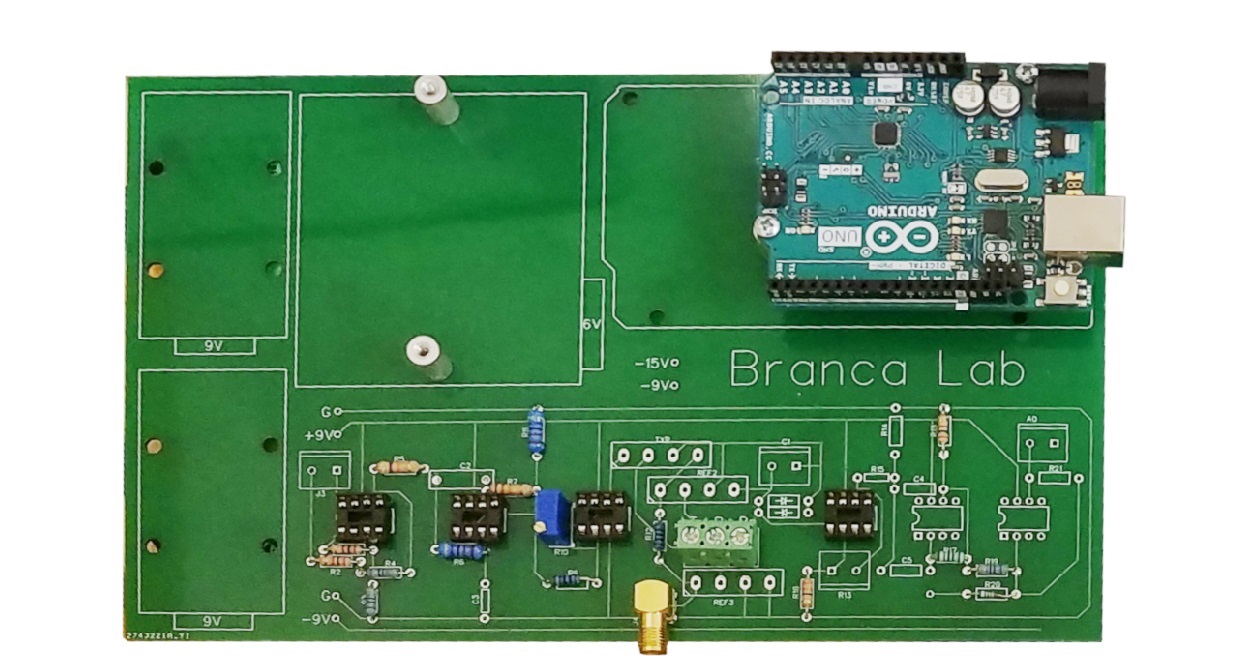
    I worked in Dr. Tamara's Branca's biomedical physics lab as an undergraduate. I owe my basic experimental skills to my time in Tamara's group. I also picked up a lasting interest in magnetic resonance, which later played a role in my NSF Fellowship. Incredibly, I had the privilege of doing outdoor condensed matter research! The spectrometer operates in the earth's magnetic field and worked best away from magnetic noise caused by buildings and electrical lines.


    Computational Analysis of Ultrafast Laser Damage on Metal Surfaces

    Summers 2018, 2019

    I spent two summers in Szeged, Hungary at the ELI-ALPS laser, building a small simulation for laser ablation of metal surfaces, which is interesting for micromachining applications. I worked under the guidance of Dr. Subhendu Kahaly and Dr. Mousumi Upadhyay Kahaly. I am very grateful for their mentorship at the start of my career, even though my current work is mostly unrelated.


Pic 01

GPU Fractal Generation

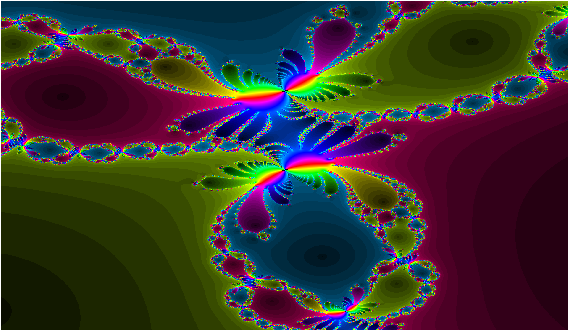
I am interested in generating fractal images from algorithms such as the Newton-Raphson root finding method or from some dynamical equations. I've done this a few times on purpose, and a few times on accident trying to simulate quantum circuits. I've done a tiny bit of work investigating how graphics processing units (GPUs) can be best used to turbocharge fractal generation.

Pic 02

Kelvin-Helmholtz Instability

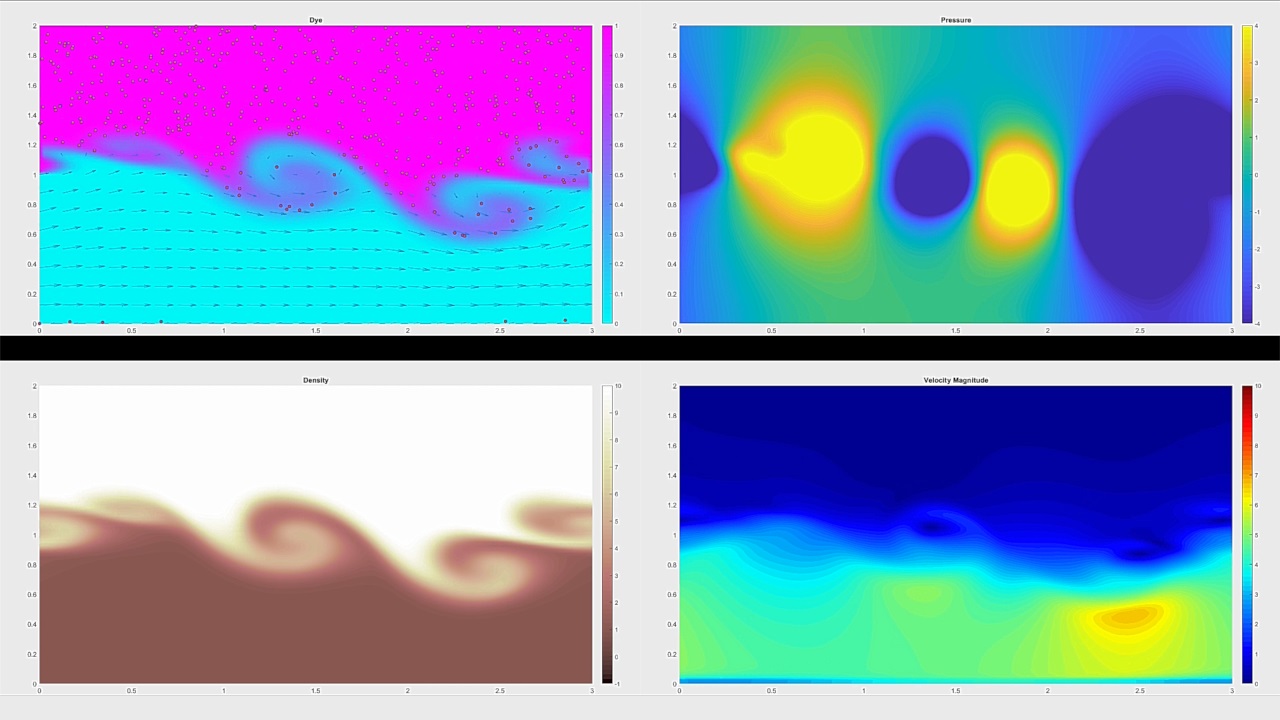
If you watch the milk swirl when you pour it in your coffee, you probably are like me. Fluid dynamics is easy to formulate (it requires no quantum mechanics, electromagnetism, or relativity) yet so hard to understand. A million dollars waits for the first person to solve Navier–Stokes existence and smoothness, for example. A far less ambitious goal is the simulation of a 2D fluid undergoing the Kelvin-Helmholtz instability, a kind of turbulence that occurs when fluids shear.

Pic 02

Applets

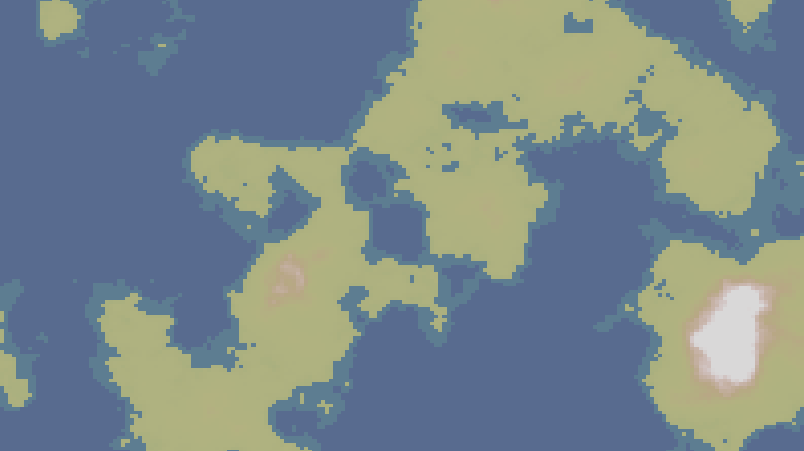
At some point I had the idea of writing Javascript applets to run physics simulations in the browser. Then I realized this was a solved problem. Some of my ideas are still here, decaying into a programmatic high-entropy state.

Pic 01

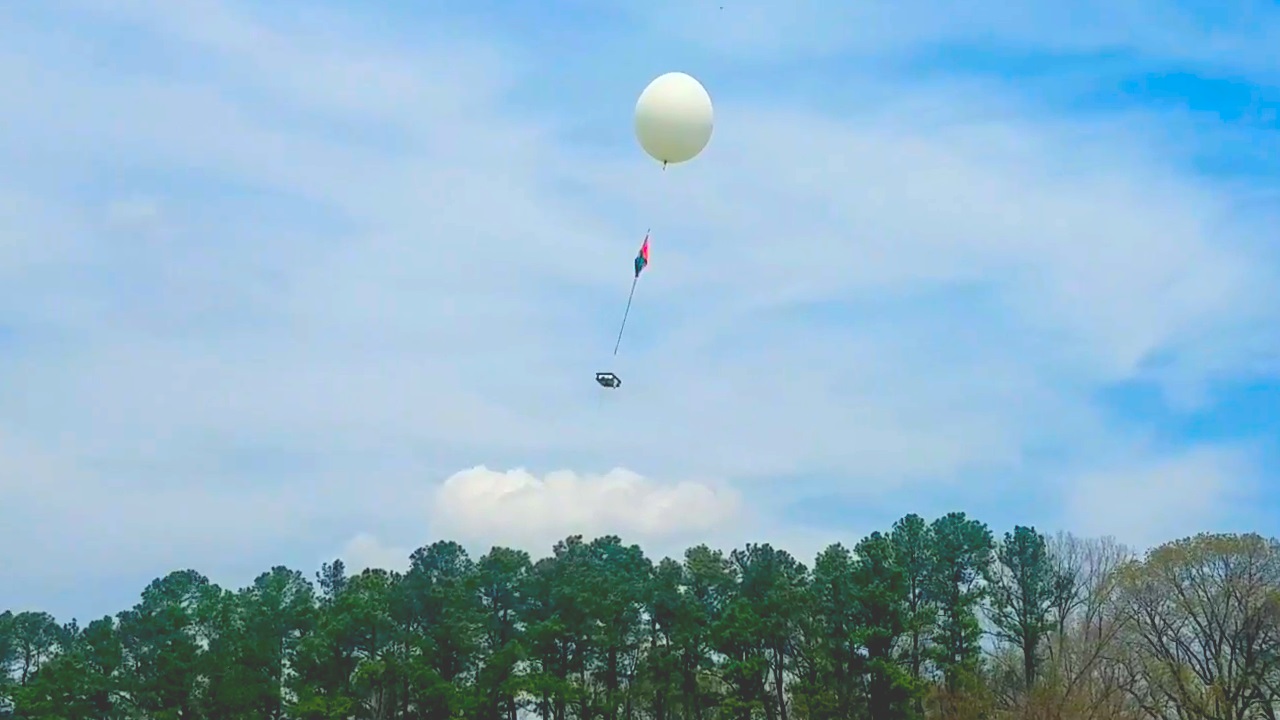
Weather balloons

Weather balloons are a surprisingly accessible way to send sensors, cameras, and experiments into the stratosphere. Somehow some friends and I succeeded in measuring radiation levels at 94,000 feet on a $1000 budget from the UNC Physics Department. In 2023 I also tagged along with a Pitt expedition to measure shadow bands during solar eclipses. I did practically nothing but the hardworking folks from the Pitt team put together a nice publication with the results.